
SPT Test (Standard Penetration Test)
What is the SPT test and why is it important? Learn how N-values indicate soil strength, how reports guide foundation depth/type, and what to check in a good SPT report.
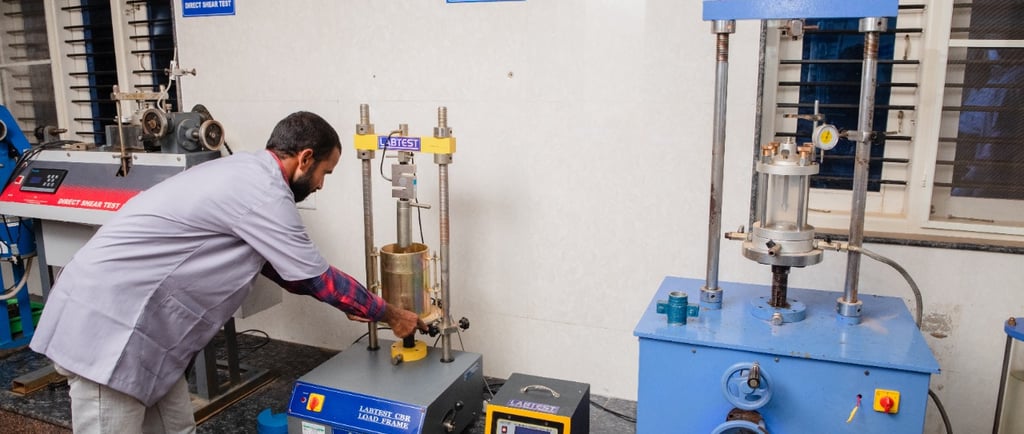
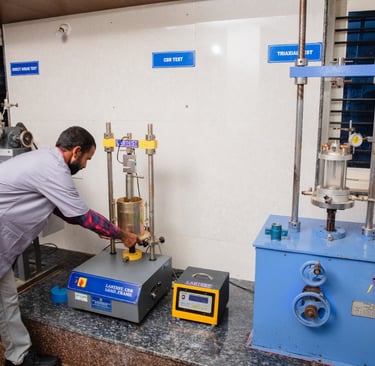
The SPT test (Standard Penetration Test) is one of the most widely used field tests in India for evaluating soil strength. When clients ask “Is soil testing really needed?”, the simplest answer is: SPT N-values directly influence your foundation design.
What is the SPT test?
SPT is performed inside a borehole. A standard sampler is driven into the soil using a hammer of standard weight dropped from a standard height. The test measures how many blows are needed to penetrate a fixed distance—this becomes the N-value.
What does the N-value mean?
In simple terms:
Low N-value → loose/soft soil → higher settlement risk
High N-value → dense/stiff soil → stronger bearing support
Your geotechnical engineer uses N-values (with corrections) to estimate:
Bearing capacity
Settlement
Soil consistency/density
Foundation type & depth
Why SPT is important in Bengaluru/Karnataka
Many sites have variable strata: filled land, clay pockets, sandy layers, weathered rock. SPT helps identify these changes with depth so the foundation is designed safely.
What should a good SPT report include?
Borehole depth & location
Soil strata description
Groundwater level (observed)
Raw and corrected N-values
Lab test summary (Atterberg limits, gradation, etc.)
SBC recommendation + settlement consideration
Clear foundation recommendation
Common mistakes to avoid
Doing “one borehole for a big site” (insufficient coverage)
Missing groundwater details
Not correlating lab results with field data
Using generic SBC without site interpretation
Need an SPT-based soil investigation for your project? Edge2 provides field investigation + lab testing + clear foundation recommendations.
EDGE2 Engineering Solutions India Pvt. Ltd.
Quick Links
Phone
+919448377127
+919880973810
080-50056086
© 2025. All rights reserved. This website is still under construction.


Connect with us
Working Hours:
Monday to Saturday 9:00 AM - 6:00 PM
Address: