
Soil Testing Before Construction in Bengaluru
Planning a building in Bengaluru or Karnataka? Learn why soil testing before construction is essential, what tests are done, how reports help foundation design, and how to avoid costly failures.
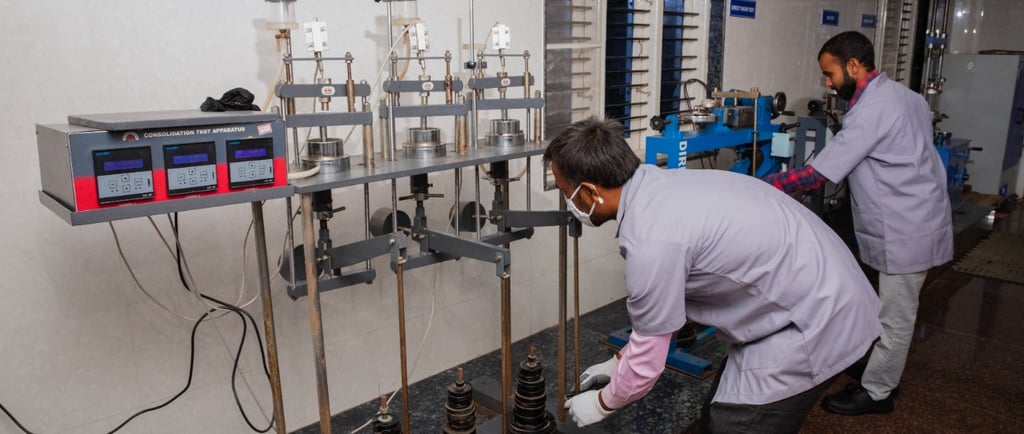
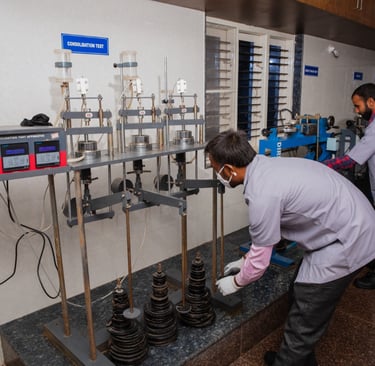
If you’re planning a house, apartment, warehouse, or commercial building, soil testing before construction is not an “extra”—it’s the foundation of a safe and economical design. Many structural issues (cracks, uneven settlement, tilting, water seepage, foundation failure) start with one mistake: building without understanding the soil.
Why soil testing matters?
A building doesn’t stand on concrete alone—it stands on soil. Soil can be soft clay, loose sand, filled-up land, or weathered rock, and each behaves differently under load. Soil testing tells your engineer how much load the ground can safely carry, how deep the foundation should go, and what precautions are needed for groundwater and settlement.
What a soil testing report provides
A professional geotechnical report typically helps with:
Soil strata profile (layer-by-layer soil type)
SBC (Safe Bearing Capacity) recommendations
Settlement risk and soil compressibility
Groundwater level observations (seasonal variation matters)
Foundation recommendations (isolated footing / raft / pile)
Construction precautions (dewatering, backfill, compaction)
Soil testing process includes
Site visit & location marking
Boreholes / trial pits based on area and building type
Field tests (commonly SPT)
Soil sampling (disturbed/undisturbed)
Lab testing (moisture, gradation, Atterberg limits, etc.)
Interpretation + final recommendations by geotechnical engineer
Common tests used in soil investigation
SPT (Standard Penetration Test) – most used for foundation decisions
Grain size analysis – sand/silt/clay proportions
Atterberg limits – plasticity & clay behavior
Moisture content, density – field condition
Proctor compaction – for backfill & road subgrade
CBR – for road/parking pavements
Plate load test – direct bearing assessment (as required)
Real cost vs real savings
Soil testing cost is small compared to:
Overdesigning foundation “to be safe” (wasted concrete/steel)
Underdesigning and later facing settlement repairs (very expensive)
Delays due to redesign and rework
When should you do soil testing?
Do it before finalizing foundation drawings and before excavation. Ideally, do it early so your architect and structural engineer can align layouts and loads correctly.
Why choose a Certified laboratory?
For soil and materials testing, calibration, method compliance, and traceability matter. A certified lab follows controlled procedures, equipment calibration, and quality checks—so your report is dependable for design and approvals.
Planning construction in Bengaluru/Karnataka? Contact Edge2 for soil testing and geotechnical investigation and get a clear foundation recommendation before you build.
EDGE2 Engineering Solutions India Pvt. Ltd.
Quick Links
Phone
+919448377127
+919880973810
080-50056086
© 2025. All rights reserved. This website is still under construction.


Connect with us
Working Hours:
Monday to Saturday 9:00 AM - 6:00 PM
Address: